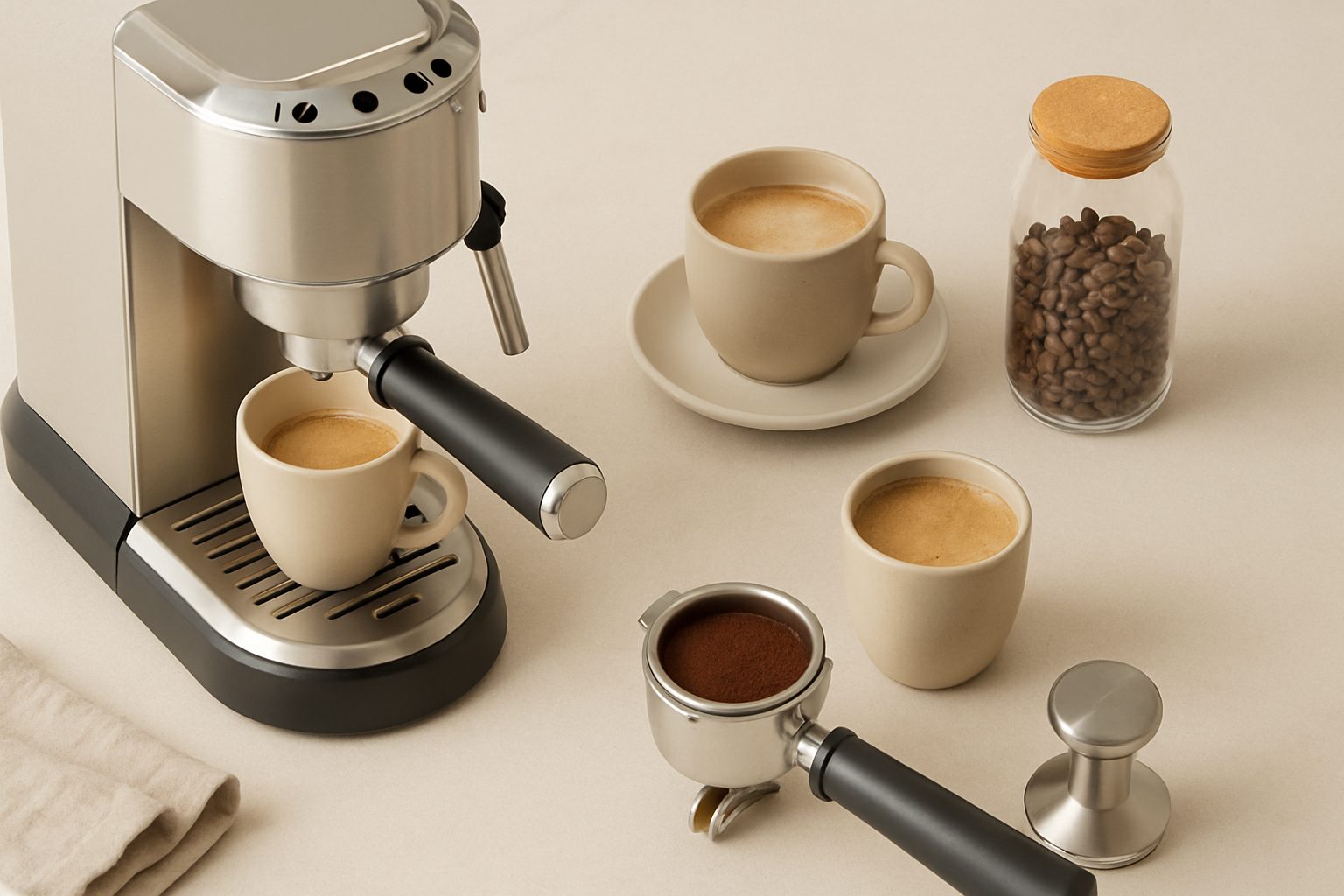
Best Home Espresso Machines UK 2025: Top Picks for Every Budget
Buying a home espresso machine is one of those decisions that sounds simple until you're standing in front of thirty options with a budget in one hand and a list of confusing specifications in the other. Boiler type, pump pressure, grinder integration, steam wand quality — it all matters, and the wrong choice means either a machine gathering dust or a daily ritual that never quite delivers.
This guide cuts through the noise. We've focused on four machines that consistently appear at the top of real-world recommendations, from online coffee forums to specialty roaster blogs. They cover a broad price range, and each one has a clear reason to exist.
---
What to Look for Before You Buy
Before reaching for your wallet, consider three things: how involved you want to be, whether you already own a grinder, and how much counter space you can spare.
Involvement level matters enormously. A semi-automatic machine rewards patience and practice. A super-automatic handles everything at the press of a button but typically produces a less nuanced cup. Everything in this list is semi-automatic, which reflects where most serious home baristas end up.
Grinder quality is the most overlooked variable. Even an excellent espresso machine produces mediocre results with stale pre-ground coffee or a poor burr grinder. If you don't own a grinder, factor that cost in — or choose a machine with one built in.
Boiler type affects workflow. Single-boiler machines make you wait between pulling a shot and steaming milk. Dual boilers or thermoblock systems handle both simultaneously. At the home level, the gap is manageable if you learn the rhythm.
---
De'Longhi Dedica EC685 — Best Budget Pick
Price range: £120–£160
The Dedica is slim — only 15 cm wide — which makes it the only machine on this list that fits comfortably in a smaller kitchen without any reorganisation. It uses a thermoblock heater, so it's ready in roughly 30 seconds, and the 15-bar pump delivers adequate pressure for a decent shot.
The steam wand is the main compromise. It's a panarello-style wand that injects air automatically, which makes foaming easier for beginners but limits your control over microfoam texture. Latte art is difficult; a reasonable flat white is achievable.
What it does well: Speed, compact footprint, affordable entry point, easy to clean.
Where it falls short: The steam wand limits milk texture, the portafilter basket is shallow, and it doesn't reward advanced technique — you'll outgrow it if you develop a serious interest.
This is the right machine if you want espresso at home without a significant commitment and you're happy to upgrade later.
---
Breville Bambino Plus — Best for Espresso Purists on a Tighter Budget
Price range: £250–£300
Breville (sold as Sage in the UK) built the Bambino Plus around one idea: remove every excuse not to pull a good shot. The thermojet heating system reaches temperature in three seconds. The steam wand is automatic — it heats, steams, and stops without you manually purging — but it also has a manual mode that produces genuinely excellent microfoam once you learn the position.
The portafilter is a professional 54 mm, the same diameter as the more expensive Sage machines, so technique you develop here transfers directly. There's no grinder, so you'll need one separately, which is actually a feature: it means you're not locked into an integrated system and can upgrade components independently.
What it does well: Consistent shot temperature, genuinely useful auto-steam function, compact, builds real skills.
Where it falls short: No integrated grinder, the drip tray fills quickly, and the small water reservoir means refilling fairly often.
For anyone serious about espresso who doesn't want to spend £600+, the Bambino Plus is the most honest recommendation on this list.
---
Sage Barista Express — Best All-in-One Machine
Price range: £550–£650
The Barista Express is the machine that convinced thousands of people they could make café-quality espresso at home. The built-in conical burr grinder is the key: dose-to-shot consistency becomes dramatically easier when grinding and brewing happen in the same workflow. You dial in grind size, dose, and tamp pressure together, then pull your shot.
The steam wand is manual and capable of producing proper microfoam for latte art. The 54 mm portafilter, pressure gauge, and PID temperature control give you enough feedback to genuinely improve over time. This is a machine that teaches you as you use it.
What it does well: Complete workflow in one unit, strong grinder for the price, excellent community support and tutorials, clear pressure gauge feedback, durable build.
Where it falls short: It's large and heavy (around 12 kg). The grinder, while good, has a ceiling — dedicated single-dose grinders will outperform it eventually. You also can't upgrade the grinder independently.
If you want one machine that handles everything and you have the counter space, the Barista Express is the most popular choice in this category for good reason.
---
Gaggia Classic Pro — Best for Tinkerers and Long-Term Ownership
Price range: £350–£430
The Gaggia Classic Pro is the machine that coffee obsessives recommend when they want you to understand what espresso actually is. It's a single-boiler, commercial-group-head machine that has remained fundamentally unchanged for decades — because it works.
The commercial-style 58 mm portafilter is the same size used by professional machines, which means accessories, baskets, and tampers are plentiful and cheap. The steam wand produces genuine dry steam and rewards practice with excellent microfoam. The machine is also highly moddable: a PID temperature controller, new springs, or a pressure gauge can all be added without voiding anything meaningful.
What it does well: Exceptional longevity (many machines last 10–15 years with basic maintenance), genuine upgrade path, large accessory ecosystem, produces outstanding espresso once dialled in.
Where it falls short: The learning curve is steeper than any other machine here. Temperature surfing (letting the machine cool between cycles) used to be necessary before PID mods. Stock, it's less plug-and-play than the Sage machines.
Buy the Gaggia Classic Pro if you want a machine you'll still be using in 2035 and you're happy to invest time learning.
---
Quick Comparison
| Machine | Best For | Grinder Included | Steam Wand | Approx. Price | |---|---|---|---|---| | De'Longhi Dedica EC685 | Compact beginners | No | Panarello | £120–£160 | | Breville Bambino Plus | Skilled beginners | No | Manual/Auto | £250–£300 | | Sage Barista Express | All-in-one convenience | Yes | Manual | £550–£650 | | Gaggia Classic Pro | Long-term enthusiasts | No | Manual | £350–£430 |
---
Final Thoughts
There's no universally correct answer here. The De'Longhi Dedica is a sensible first step; the Bambino Plus is where most people find a comfortable home; the Barista Express eliminates the grinder decision; and the Gaggia Classic Pro rewards patience with a machine that can last a lifetime.
Whatever you choose, invest in a quality burr grinder if one isn't included, buy freshly roasted beans from a UK specialty roaster, and accept that the first few weeks involve some mediocre shots. That's not a flaw in the machine — it's how the skill develops.
More options
- Sage Barista Express Espresso Machine (Amazon UK)
- De'Longhi Dedica Espresso Machine (Amazon UK)
- Gaggia Classic Pro Espresso Machine (Amazon UK)
- Jura E6 Bean-to-Cup Coffee Machine (Amazon UK)
- De'Longhi Magnifica Evo Bean-to-Cup (Amazon UK)